
THE PROCESS
From Light to Metal
DEVELOPED IN CHEMISTRY. SEALED IN METAL.
A traditional photographic process. A remarkable material. The result is a permanent image, developed into metal.
From a photograph to a lasting piece.
TRADITIONAL DARKROOM PROCESS + PHOTO-SENSITIVE ALUMINUM = LASTING ART
THE DIFFERENCE
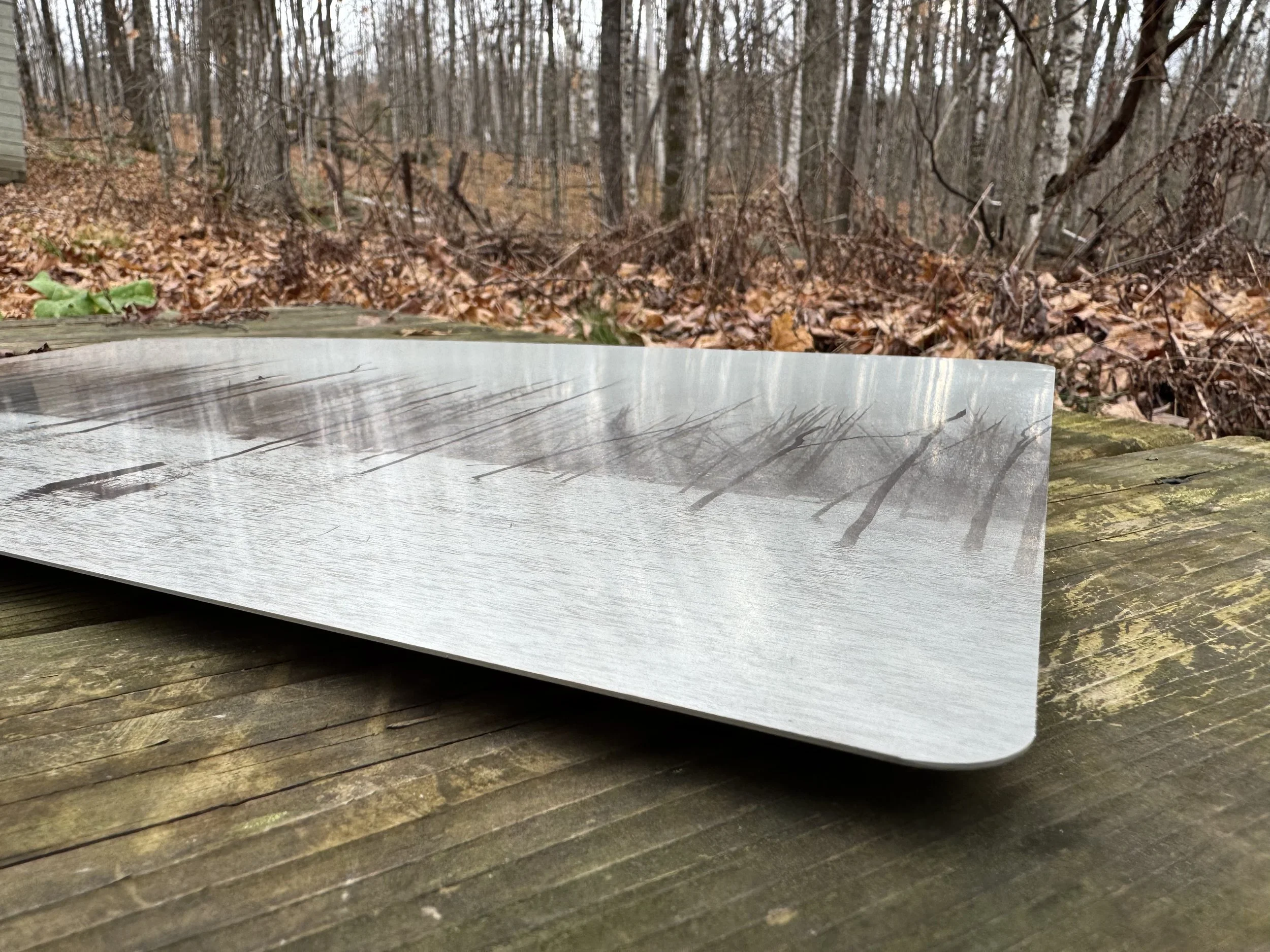
Not printed on metal. Developed into it.
Most photographs on metal are created by printing an image onto a prepared metal panel using ink or a transfer process. Photo-anodized aluminum is different.
The aluminum is first treated through an anodizing process, creating a porous oxide layer that can receive a photographic image. A light-sensitive process and traditional darkroom chemistry are used to form the image within that layer.
Rather than sitting on top of the metal as a layer of ink, the image becomes integrated into the anodized surface.
This gives photo metal its distinctive character: rich tonal detail, deep blacks, subtle highlights and a natural metallic quality that interacts with light.
The Darkroom Steps.
-
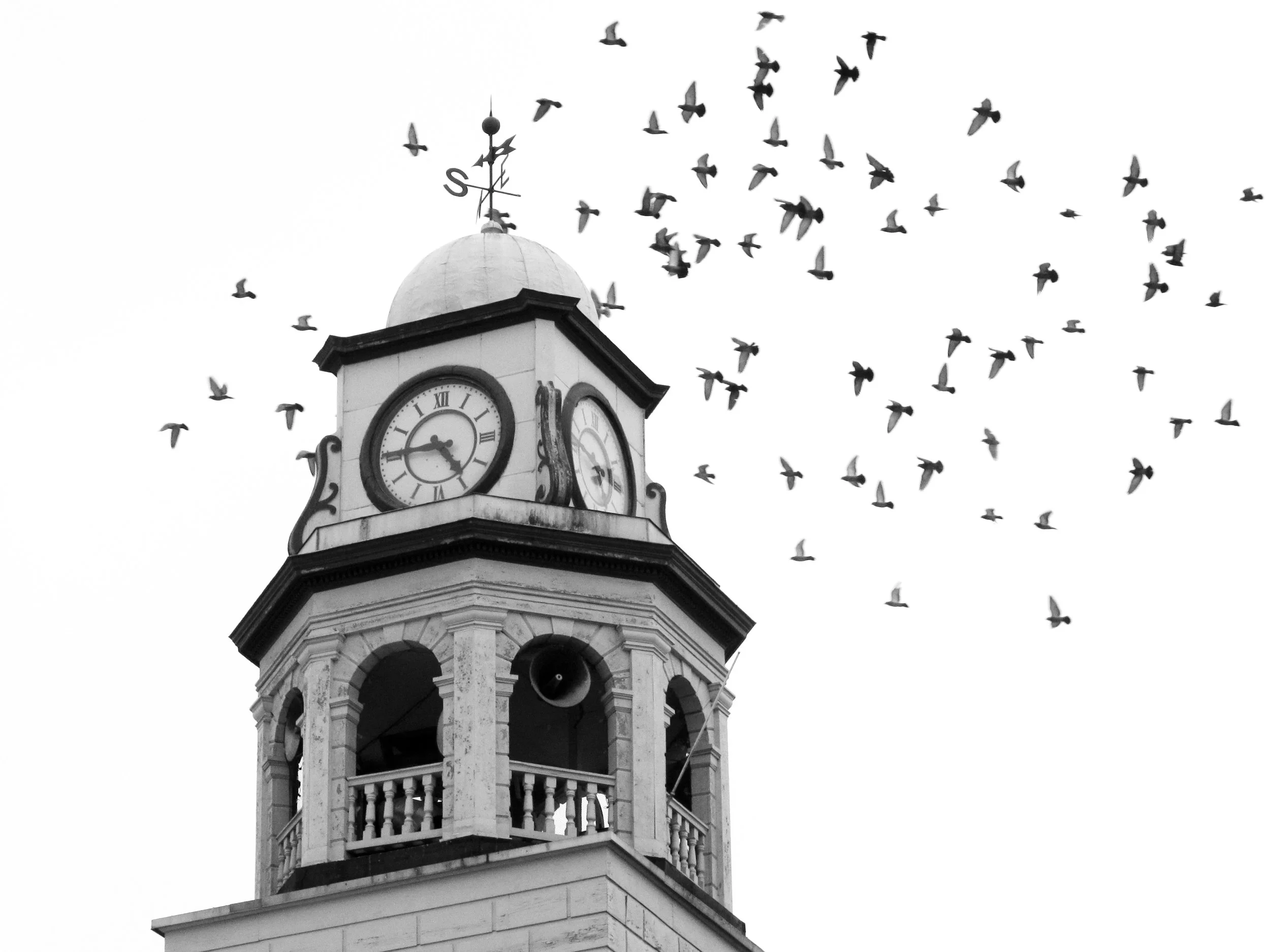
![Black-and-white photo of a historic clock tower with a domed cupola and flying birds]()
01. PHOTOGRAPH
Begin with a photograph, design, or illustration. Make any edits.
-
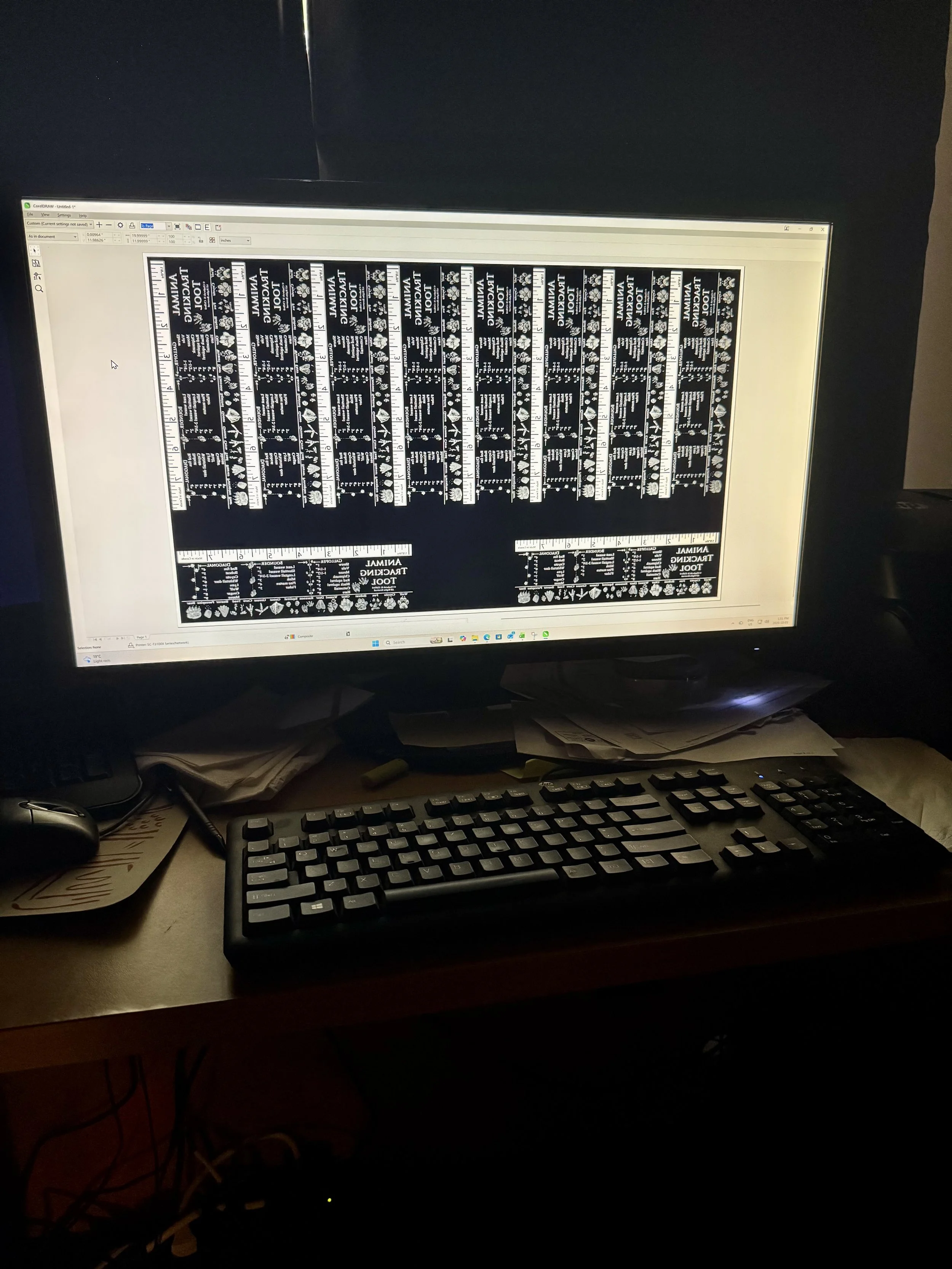
![Computer monitor displaying CorelDRAW with repeated animal tracking ruler graphics, keyboard, mouse, and papers on a desk.]()
02. NEGATIVE
The image is prepared as a negative, which will be used to expose onto the aluminum plate.
-
![Close-up of a vintage arcade cabinet control panel with a combination lock, power switch, numeric keypad, red display, and printed animal-tracking game controls.]()
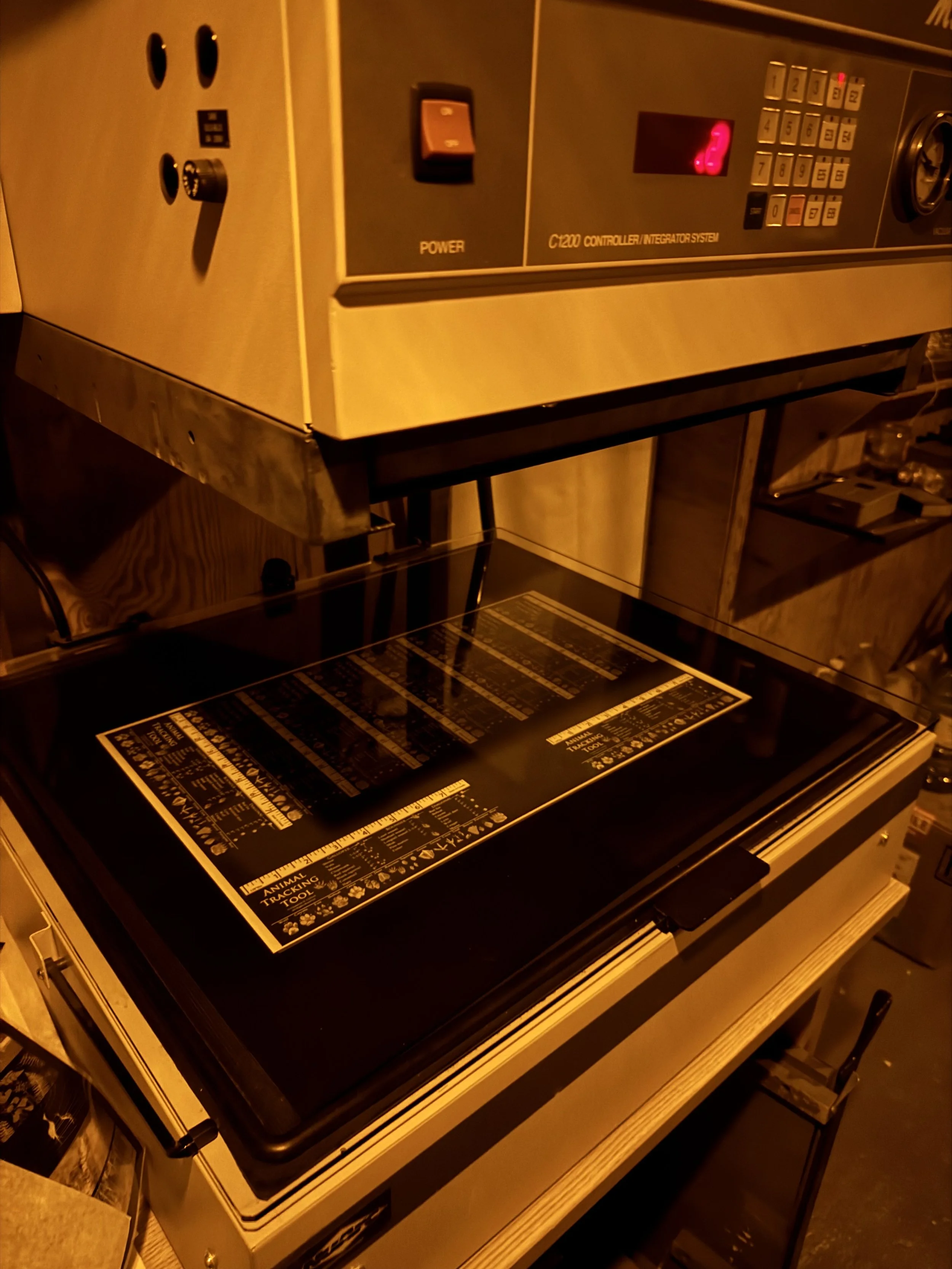
03. EXPOSURE
The negative is aligned with the light source and the image is exposed onto the photosensitive aluminum.
-
![Photographic film processing tank with orange lid, developer and fixer compartments, hoses, and darkroom supplies.]()
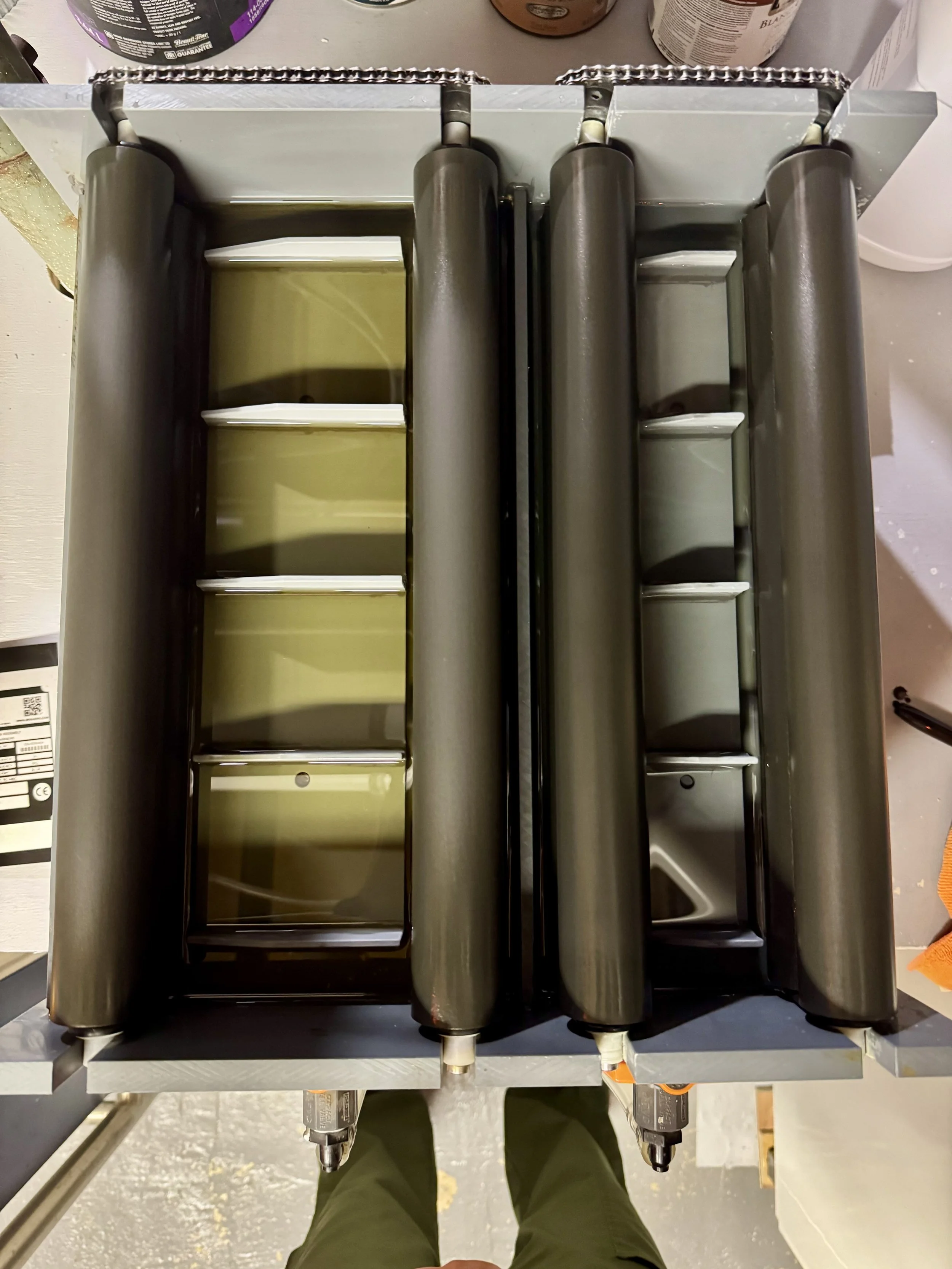
04. DEVELOPMENT
The exposed plate is run through a machine with developer and fixer revealing the image within the metal.
-
![Close-up of a hand closing a lid on a metal water tank in a darkroom.]()
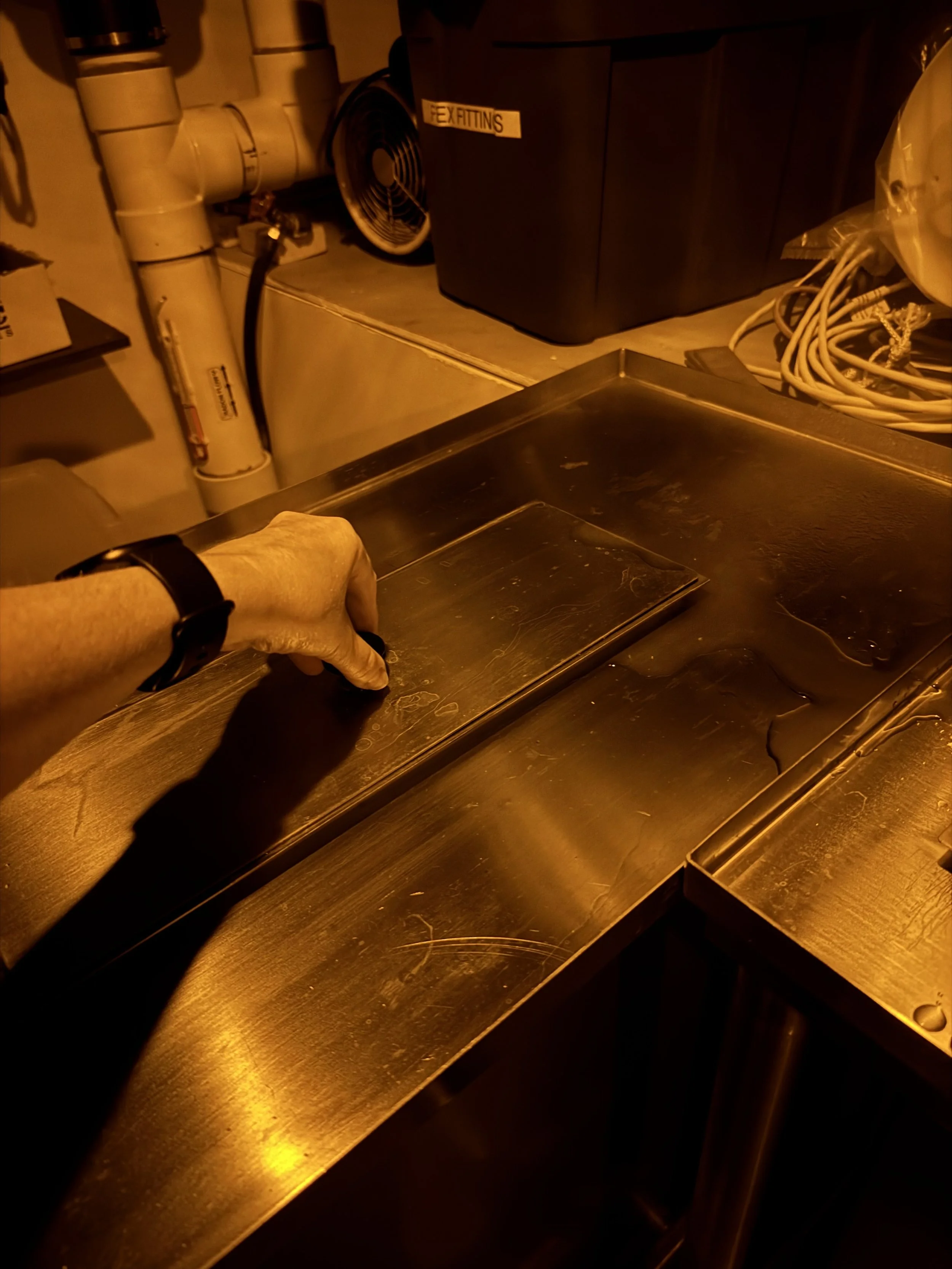
05. WASHING
The plate is rinsed to remove residual chemicals and to stop the process before sealing.
-
![A metal water tank with steam in a photographic darkroom.]()
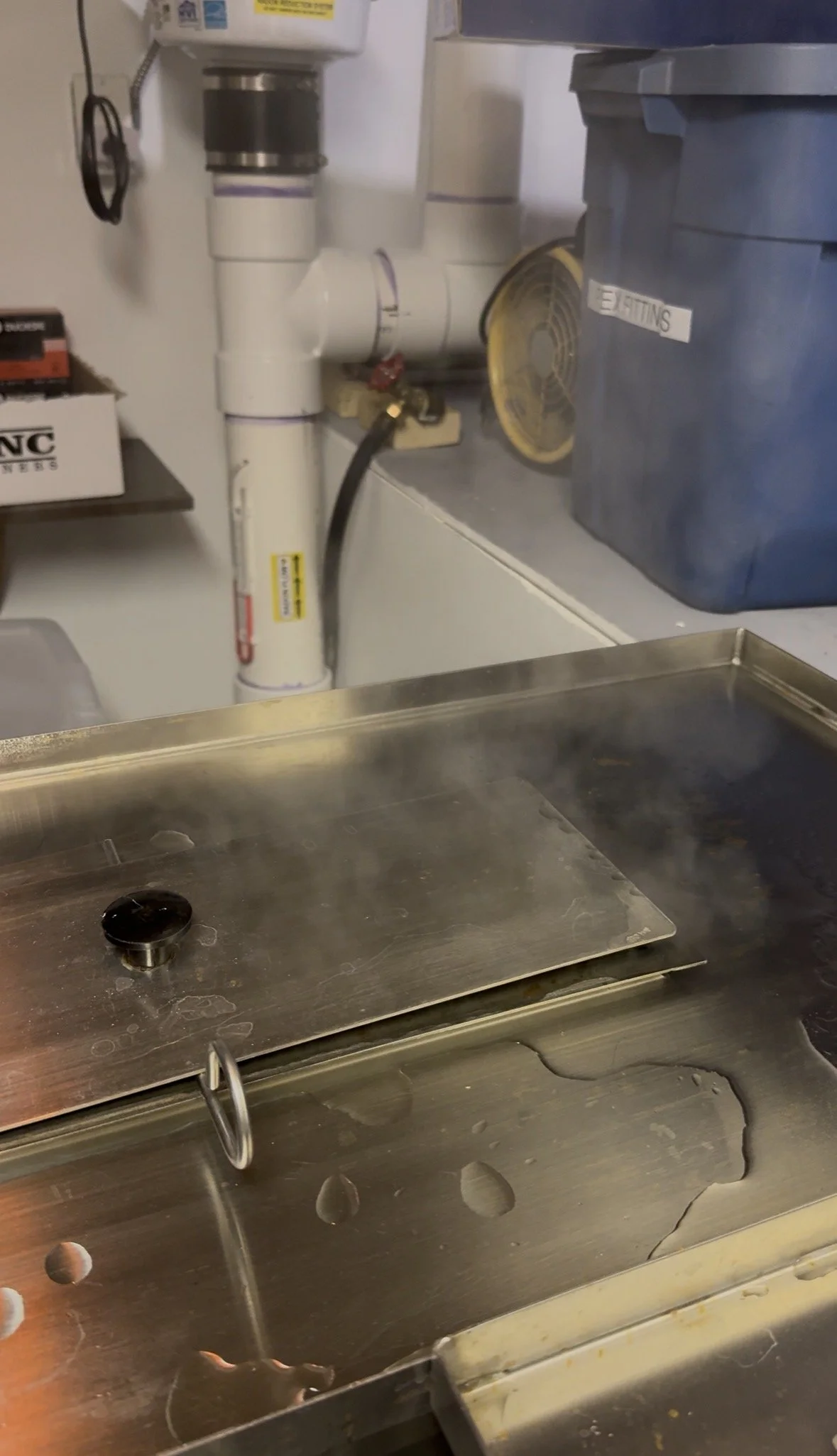
06. SEALING
The photographic image is sealed within the anodic layer, making it permanent and incredibly durable.
-
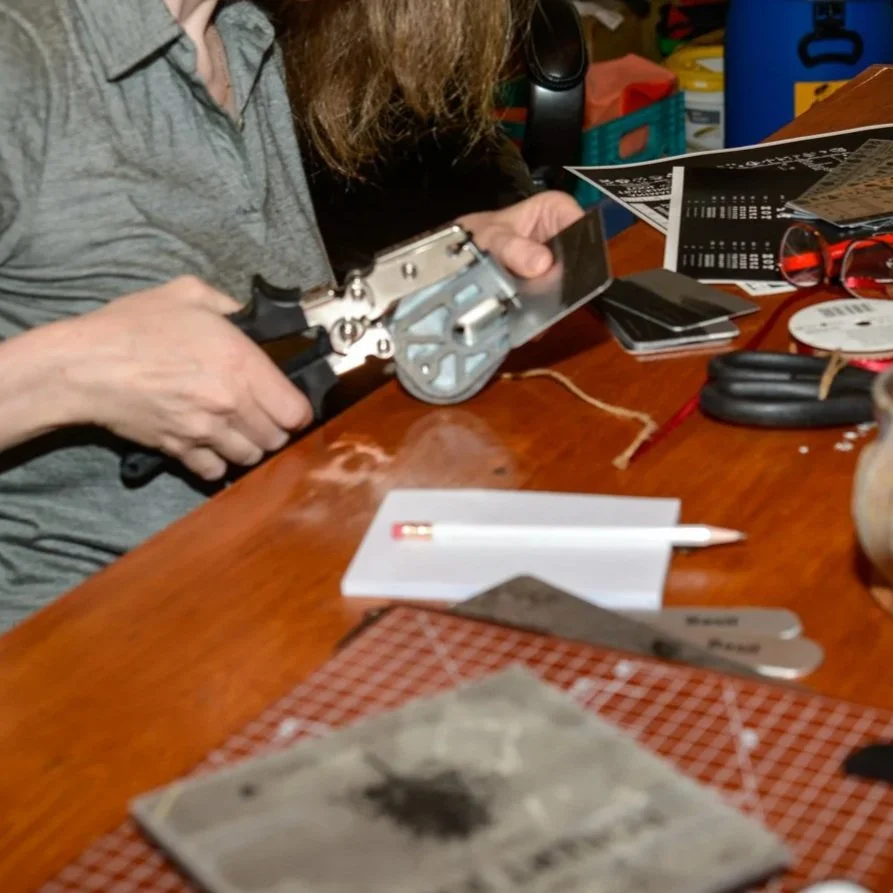
![Person using a metal corner rounder tool on a craft table with cutting mats, paper, and crafting supplies]()
07. FINISHING
The plate is cleaned, cut and cornered, and readed for mounting or use in a custom piece.
-
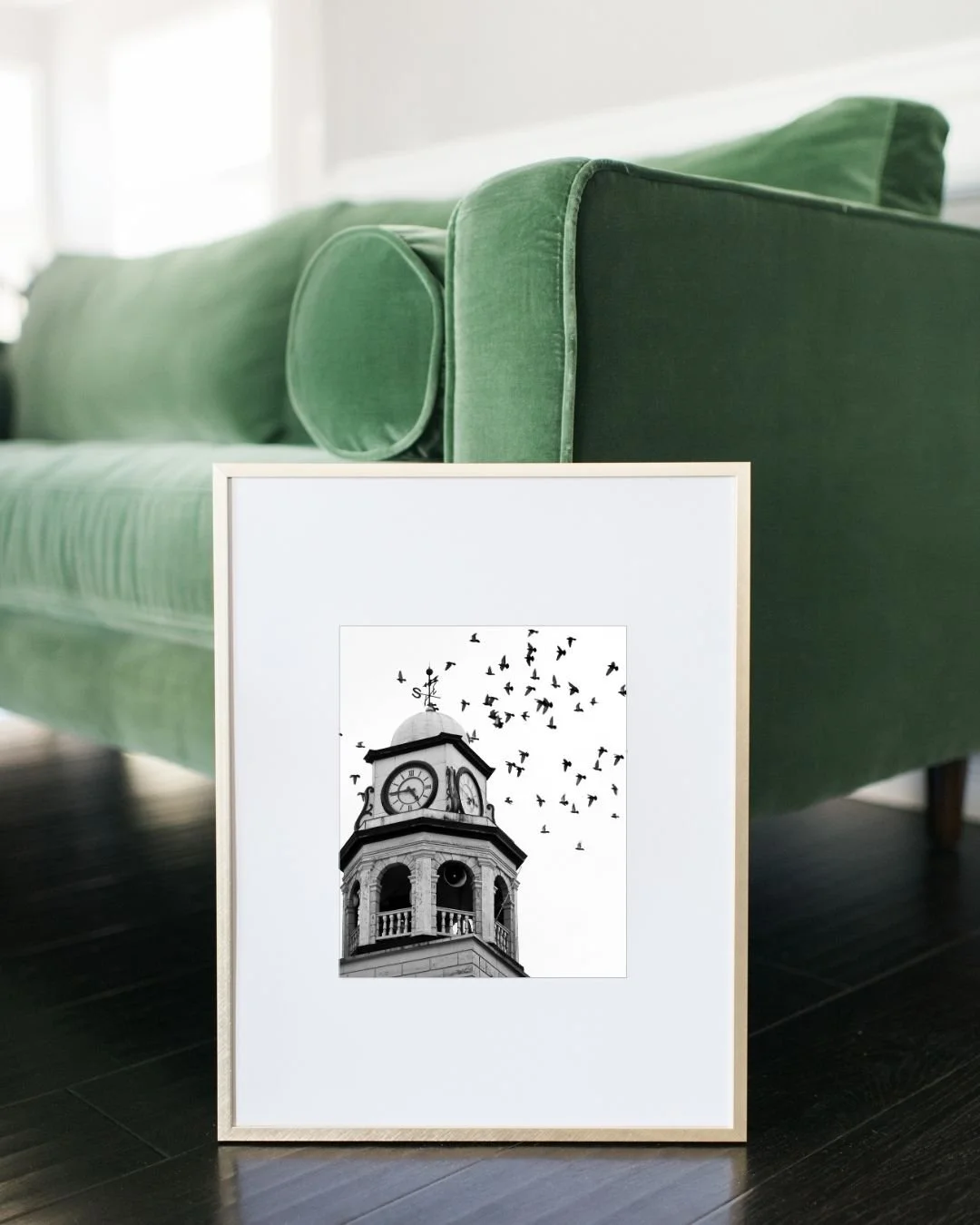
![Framed black-and-white metal photograph of a historic clock tower with birds, leaning against a green sofa.]()
08 PHOTO METAL
The result is a photographic image with depth, luminosity, and the strength of metal.
THE FINISHED WORK
A different way to experience a photograph.
Photo-anodized aluminum has a character all its own. Its metallic surface interacts with light, giving each image a distinctive appearance that can shift subtly depending on the viewing angle and surrounding environment.
I particularly love the way it brings together two seemingly different things: the familiarity of a photograph and the unexpected character of metal.
The result can be a piece of original artwork, a meaningful keepsake, a functional object or a custom creation designed around a particular photograph or idea.
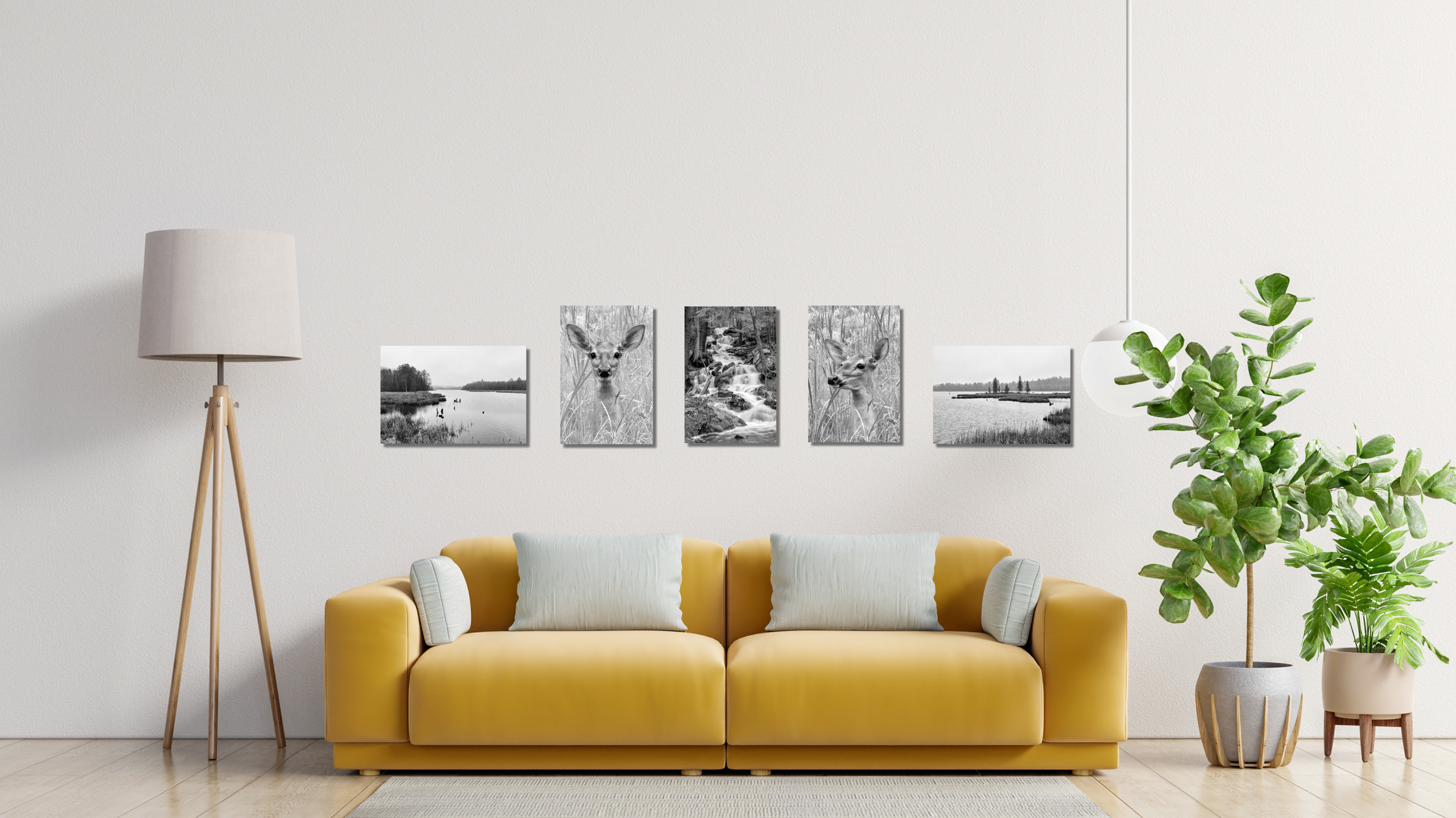
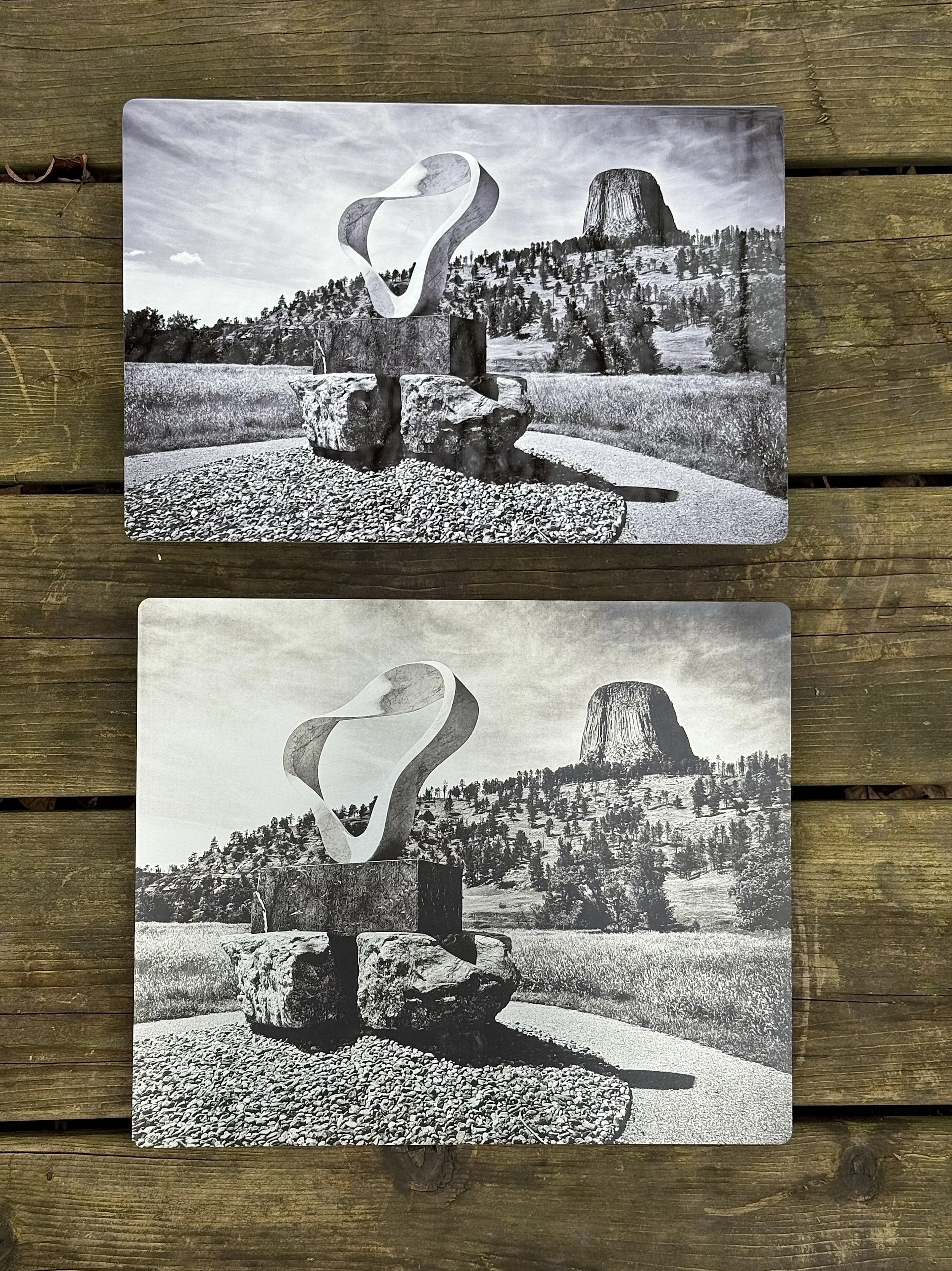
PHOTO METAL VS. CONVENTIONAL METAL PRINTS
Not all metal prints are the same.
There are several ways to put a photograph on metal. While the finished products may look similar at first glance, the processes behind them are quite different.
Conventional metal print (photo left, above):
Image applied using ink or transfer
Image sits on the prepared surface
Appearance depends on the printing method and finish
Photo-anodized aluminum (photo left, below):
Image formed through a photographic process
Image is integrated within the anodized layer
Distinctive photographic and metallic character
The difference is in how the image is made.
This is what makes the process so interesting. It brings together the history of traditional photography and a material more commonly associated with technical and industrial applications.
HAVE A QUESTION?
Custom pieces, technical information, or a project in mind - I’d love to chat.